
Local Energy Markets Could Save Us Billions, Says Award-Winning Scientist Desen Kirli
Sub head
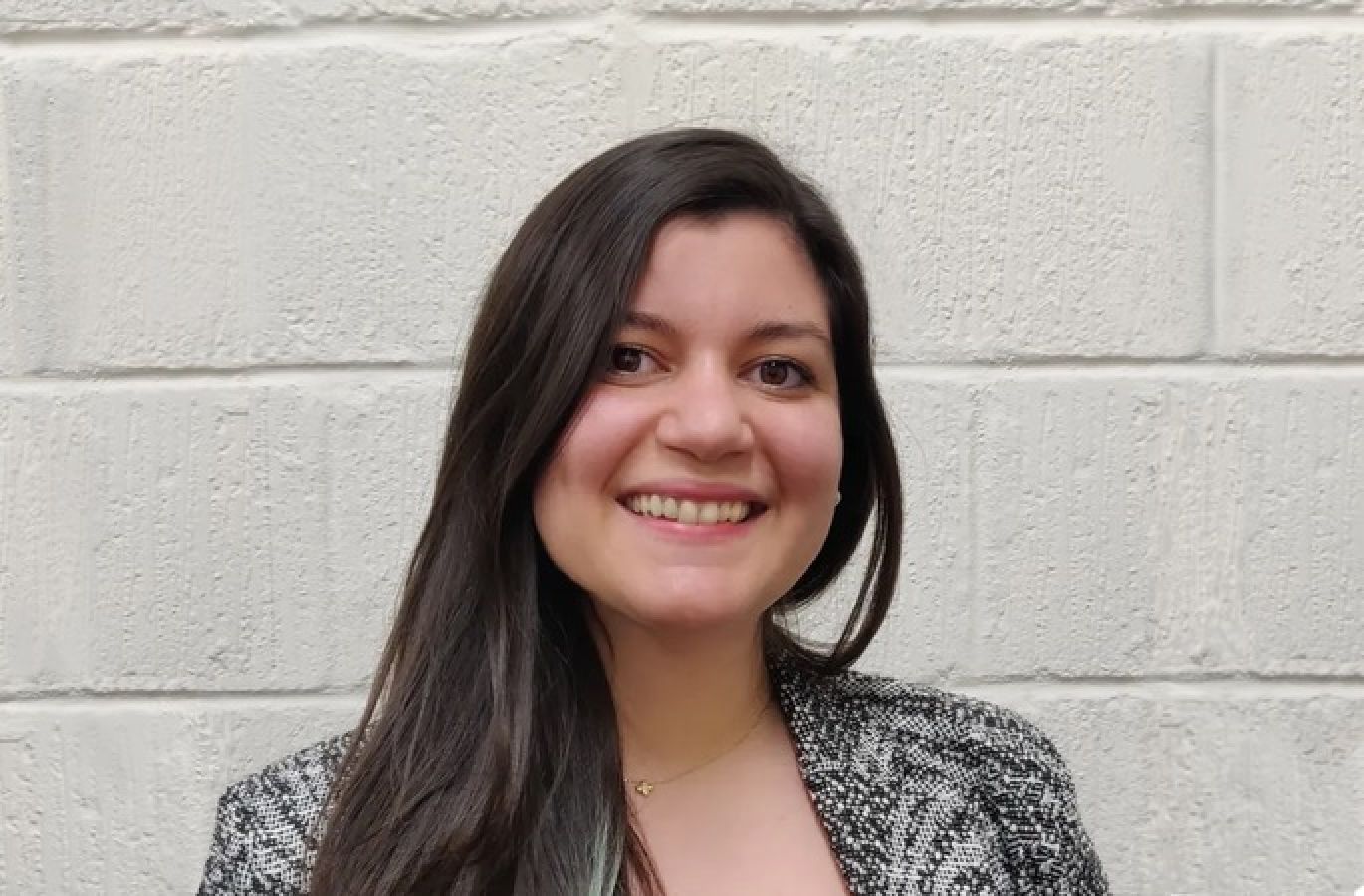
Desen Kirli is a lecturer and Elizabeth Georgeson Fellow at the University of Edinburgh. She combines expertise in energy systems and engineering with a focus on communities and solutions that could reduce energy poverty while leveraging the UK's intermittent renewable electricity. Her work centres on energy modelling, smart contracting and local energy markets. Among other achievements, she won the Scottish Renewables Young Professionals Green Energy Award.
Media
Image
Content
As the climate changes, the number of extreme weather events is increasing. The recent heatwave in the UK broke the country's record for the most days with temperatures above 34 degrees in a single year. Several European countries recorded their highest temperatures on record. Another well-known example of extreme weather is the increasing frequency of strong hurricanes and storms. In February 2022, three huge storms – Dudley, Eunice and Franklin – left millions of people without electricity. You're leading a project called D-Res that could help communities in these situations. How exactly can electric vehicles make the electricity grid more resilient? Can they essentially act like mini power plants when other sources fail to produce electricity?
Exactly that, actually. We’re seeing more and more extreme weather events, such as storms that can trigger severe cold spells. To help balance the grid and keep the lights on, we could essentially use electric vehicles as a distributed battery. That would mean every home or small neighbourhood would have its own backup batteries. In the case of a storm, the batteries would discharge to help us keep the lights and heating on. So, that’s the primary use. Another issue that arises during extreme weather events is that the grid is under significant risk in terms of system resilience. When this happens, batteries help us regulate the network’s voltage. If not regulated, we could have a blackout that could cascade through different neighbourhoods and regions of the network. In D-Res, we showcased that you could use the batteries in the electric vehicles (EVs) that belong either to the local authority, an EV sharing club, or to the residents themselves, to help regulate their grid. We looked at 2019 storms in Orkney – we showed that a similar mechanism would have reduced not only customers’ bills but also the costs related to keeping the system balanced.
You mentioned the two connected yet distinct strands of research into exactly how electric vehicles could be used as so-called flexible assets in the energy grid. How do you get car owners on board? What incentives are there?
That’s actually a really big issue. Would you be willing to give up your EV during a storm?
Well, I wish I had an EV [laughs]…
You know, same here, actually. Maybe we first need more incentives to boost EV uptake. But in terms of using EVs during storms, I don’t think it would be a mandate. It’s similar to how grid-scale batteries are paid to balance the system through grid-balancing services procured by NESO [National Energy System Operator]. Compensating the different EVs that take part in this would require a similar system. We haven’t explored this deeply enough yet. But there is a willingness to pursue similar solutions, and the problem can be cracked. Different things would work for different places. In the case of Orkney, a community spirit seems to be quite central to the energy solutions implemented there. So, understanding that the participation of your EV, and not using all of your battery, but maybe 20-30% of your fully charged battery, would help keep the lights and the heating on for everyone else for, say, four hours, doesn’t seem like an impossible sacrifice.
Your work builds on an existing project called ReFLEX, which took place in Orkney and demonstrated the technological feasibility of these V2G [vehicle-to-grid] mechanisms on the islands. You seem to be taking a slightly different approach to these physical experiments, employing so-called “digital twin” models. What are they?
That's a very topical question. A digital twin is a model that is continuously updated and temporally sensitive. It’s not just a snapshot in time – such a model would have many limitations. A digital twin aims to replicate what we see in the infrastructure and replay what happened historically. You can also run a new dataset through it to see what it will look like now, in near-real-time operation, or in the future. We’re able to validate these models and their operations against historical data to show that they’re not just crude models but digital replica representations. Hence, we call them digital twins.
When it comes to energy modelling, another important term is Optimal Power Flow modelling, which you employed when studying another way in which EVs could interact with the electricity grid in the Orkney Islands. While in the previously mentioned project you used EVs as electricity sources, here they were treated as devices that enable flexible demand. How substantially could EVs help reduce wind curtailment, enabling wind generators not to limit their generation to accommodate the grid? And would EV users be able to tailor their charging times to the electricity system?
That's a really good question. We call this smart charging. Adjusting charging times is kind of an inconvenience. You need to charge when there’s a surplus from renewable generation. A lot of research, including ours, shows that, from a technical point of view, this is feasible. There is no reason for the distribution network operators in the modelled areas to object to this. As for the other question about consumer willingness to participate, there are existing tariffs from Octopus Energy where overnight prices are lower. Wind is usually curtailed overnight, not only because that’s when wind is often strong but also because electricity demand is typically very low at night. If we’re able to use smart charging to shift demand from daytime to overnight, we will be able to reduce curtailment. When you look at the wall next to you, you can see that curtailment in Orkney is around 16%. If more EVs are deployed in Orkney, at least part of this energy can be absorbed by electric vehicles, rather than them charging at a different time and burdening the grid.
“What if we managed to keep things in equilibrium, or close to it, at the local level? This would help solve overall network imbalances. It’s similar to reaching net zero locally rather than waiting for a top-down mandate that might not work for everyone.”
In one of your studies, you divided EV owners into four groups based on their consumption patterns and modelled smart charging using these existing usage habits…
Yeah, identifying different types of users works. Different datasets help us with that. We see two trends. Some people use EVs daily, but only for commuting. They then charge, say, once a week. Others go on longer trips, sometimes multiple times per week, and charge more often. We have weekday users, weekend users, commuters, and pensioners with EVs; it’s all very different. I think tariffs and incentives go a long way in enabling smart charging, and they already exist. If you have an EV, you qualify for a few different helpful tariffs.
You've co-authored several papers on local energy markets, modelling financial negotiations among building owners, some of whom can both produce and consume electricity. These are called “prosumers”. They produce electricity, sometimes more than they need, and can then sell the surplus to other locals…
Exactly. There is a significant mismatch between demand and supply at the national level. Using national-level electricity markets, we try to identify deficits or surpluses and reach equilibrium through the balancing services market. The push for local energy markets comes from the following idea: What if we managed to keep things in equilibrium, or close to it, at the local level? This would help resolve overall network imbalances. It’s similar to reaching net zero locally rather than waiting for a top-down mandate that might not work for everyone. As you said, in local energy markets, prosumers produce electricity. They represent a recent change in our electricity systems – and a big challenge. People have rooftop PVs, electric vehicles, and high-load items such as heat pumps… In the traditional electricity system, generation was in one place and electricity was then transmitted, distributed and used in homes. Now there are households and residential loads that are producing. We were looking at designing different types of local energy markets to help match demand and supply locally. Essentially, this entails minimising our imports from the centralised grid, exporting to it, and helping it stabilise.
There were also automated AI negotiations between buildings, right? Artificial “agents” would negotiate on their behalf…
Exactly. Yeah. Because then the question becomes: How do you decide on an electricity buying price or an electricity selling price in one part of the neighbourhood compared to another? Or how do you do that here in Edinburgh compared to in London? And how can you negotiate the price? We already know that if the electricity price is higher than what people would pay their supplier, they wouldn't go for it. The same goes for being paid. If you're generating electricity and you are rewarded less than what your supplier pays you, then again, that's not something you will do. We use these supplier costs as upper and lower limits and have automated negotiations between the participating buyers and sellers to find the optimal price.
Have similar markets been trialled in places such as the Orkney Islands, which you and your colleagues have studied?
Not in Orkney, but they have been trialled in Cornwall and elsewhere. We are proposing a similar market in Orkney as well, and are in talks with the local authority, Ofgem, and other partners involved in the ReFLEX project. They will likely consider the number of electric vehicles, the extent of electrified heating, and the amount of renewables in Orkney, including community plants. We think we can develop a market structure that would make electricity cheaper for residents.
“Recently, the uptake of grid-scale batteries in the UK has been quite impressive. One of these battery energy storage systems is near here – in Straiton. However, while these batteries are really good at balancing the grid, they also come at a cost. Often, they are privately owned. If we could do this balancing with EVs, we would retain the revenue in the local community. This approach could be more just – the community could then reinvest it into something else.”
In much of your research, you focus on achieving an equilibrium of supply and demand at the local scale, as you described earlier. In your inaugural lecture, you mentioned the old-school way used to balance the energy system. What was it? And have we been able to move successfully to more modern technology?
Around 15 years ago, I was surprised that the traditional approach was either gas peaking plants or diesel backup generators. But a new market emerged, opening up to different UK participants. Diesel generators weren’t what policymakers had in mind, but people realised: “Alright, if I get a couple of diesel generators and have a diesel farm, I can just turn all of them on and get paid when the national grid is in trouble and needs a bit more supply.” So they waited for instances when the grid would be under stress. In one of the projects I cooperated on with a local company, Flexitricity, we looked at whether we could replace these diesel farms with grid-scale batteries. Back then, that was quite new. More recently, the uptake of grid-scale batteries in the UK has been quite impressive. One of these battery energy storage systems is near here – in Straiton. However, while these batteries are really good at balancing the grid, they also come at a cost. Often, they are privately owned. If we could do this balancing with EVs, we would retain the revenue in the local community. This approach could be more just – the community could then reinvest it into something else.
In the mentioned lecture, you also talked about how energy demand for the whole country changes with changing patterns of human activity. Could you talk me through that?
Yeah, sure. Demand is strongly affected by human behaviour. It all revolves around us, doesn’t it? Usually, there is a baseline demand before everybody wakes up – that’s the minimum electricity that you have to supply during the day. As people wake up in the morning, we hit the first peak of the day. During the lunch break, production in factories stops, and we see a dip. We see the highest value when consumption peaks in the evening, as everybody gets home, cooks, and uses electricity for one thing or another. Hopefully, people aren’t charging their EVs then, as we don’t want to add to the peak. After this peak consumption, it slowly tapers down, and we come back to the baseline demand overnight. Our transmission and distribution lines are usually the most overloaded between 4 and 7 pm. This is when our transformers are working the hardest, and it’s also when all of the losses occur.
Throughout the year, we have this thing called Triads – three periods of the highest demand. Usually, they fall around Christmas and New Year’s. This makes sense because that’s when people are doing most of their cooking and celebrating; they are indoors – the heating, lighting, and everything else adds up. We also record high electricity demand during World Cups. The system operator needs to balance it – especially during half-time breaks, when everybody goes to the bathroom, boils the kettle, or opens the fridge. Everyone’s doing this simultaneously, across the globe. That adds up to peak global consumption.
It probably got even worse with this year’s hydration breaks…
Definitely. [laughs]
“According to some estimates, we could save as much as 40 billion pounds. The savings are so large, or larger than people expect before they first hear this number, because balancing and flexibility are the second job of these assets. People buy EVs for travelling and heat pumps for heating. If we’re able to influence when they’re consuming electricity, it reduces the need for us to use public money or ask an international company to come and build something from scratch that would have a big carbon footprint.”
But if we manage to gather data on small energy assets and incorporate them into the system flexibly, how much can we, as a country, save?
That’s a really good question. According to some estimates, we could save as much as 40 billion pounds. The savings are so large, or larger than people expect before they first hear this number, because balancing and flexibility are the second job of these assets. People buy EVs for travelling and heat pumps for heating. If we’re able to influence when they’re consuming electricity, it reduces the need for us to use public money or ask an international company to come and build something from scratch that would have a big carbon footprint. Economic savings are just one part of it – but when you think about it, you get more from an asset that has already been bought – even from an environmental, “carbon” point of view. It goes a long way. I don’t think this is always obvious to people. If small EVs, collated together, make up a big battery, why shouldn’t we just use a big battery? Because the EVs are already here, and it’s going to be their second job. When a big battery is not in use, it just sits there with a big carbon footprint. That’s why I’m so motivated about the research we talked about earlier.
How does the term “smart contracting” fit into all this?
The closest thing to a smart contract that people know and use every day is a digital contract, such as when you’re buying a service or even renting a house. What makes smart contracts smart is the extra step that’s automated. That step is there to verify that you delivered the service you were supposed to. So, let’s first try to understand the motivation behind using a similar contract. If we’re trying to do what a single grid-scale battery would do with hundreds of EVs, it’s a big challenge in terms of information and coordination. If you promise to deliver 50% but only deliver 30%, how am I going to keep track of this? And how can we do this for hundreds of EVs participating? Smart contracting becomes the key enabling technology. When you set up a smart contract, distribute it to people, and they accept it on their phones or applications, it can automatically communicate with their smart meter or EV charger to monitor what they were supposed to do – for instance, shifting the time they would be charging. A good example is when the grid is under extreme stress. We know that we need to reduce demand immediately. Everybody has to stop charging for the next 15 minutes. This could be sent as a smart contract. People would get paid based on how many of the 15 minutes they paused for – say, one pound per minute or 15 pounds for 15 minutes – a highly paid service. If the service were delivered only for 5 minutes, then the reward would automatically be reduced to five [pounds]. If we’re proposing a decentralised solution for balancing, flexibility or markets, then we have to use enabling technologies like this one. Otherwise, we won’t be able to track who’s doing what and might actually end up with a bigger problem, rather than solving stress on the grid.
We’ve been discussing different types of energy modelling. Who could this technology benefit beyond science and academia?
A good example is the current Care [Community-led Affordability and Residential Energy Equity] project in Orkney. We’re working with the local authority, a housing association, and a fuel poverty charity. We created a digital assistant. You tell it that you have, say, an oven and a washing machine, and you also tell us how you use them. It models the area’s renewable energy generation, congestion, and other factors, and asks: “Would you be able to shift your demand from this time to another?” We also put incentives in place. Right now, people who participate could accidentally end up with higher bills, because the current system isn’t set up for this. Working with the partners, we have put together a bill-cushioning fund that compensates participants for taking part in the trial if their bills accidentally increase.
What type of modelling technology supports this work?
There are a few different ones. One of them is a model of the local energy market – so far, we’re not using AI agents; we have simplified it. Looking at electricity generation, its constraints, and people’s demand, we have come up with a local electricity tariff for the area that can help people shift their demand to times that work well with the local energy system. There’s also a power flow model, although we mainly want to first understand people’s willingness to shift their consumption to different times. We focus on social housing, meaning that people do not necessarily own EVs and heat pumps here. People who do own these assets right now are early adopters, usually from affluent backgrounds, so these flexible demand services are not necessarily something that applies to everyone. We chose social housing because we felt that perhaps when we talk about flexibility, we might be leaving some people behind – that’s why we’re trying to understand what residential flexibility might be in residential housing. We want to see if we could scale this up without overloading the power system, and that’s where power flow modelling comes in. It’s to verify that the market solution we put forward is feasible for the distribution network operator. So far, there are around 30 people involved in the project – we’re looking to scale this up to all of the Orkney Islands. If we see that it’s feasible there, there’s no reason why the same thing couldn’t be repeated here in Edinburgh or even on a nationwide scale.
This sounds like a great community project – have you also applied your expertise to work with industry partners?
Yes, I’ve also worked on more profit-driven, industry-related research. It focused on digital twins. The collaboration was with a company called SCENE [Social Enterprise for Local Energy Futures]. We modelled a part of the energy network in Aberdeenshire. It was an interesting part of the network. The distribution network operator knew the area was constrained, but residents were also interested in taking up EVs, heat pumps, and other devices that would increase energy demand to a level requiring very costly upgrades. They commissioned us to model the network in a very representative way – essentially a digital twin – and then calculate projections for 2030, 2050, and beyond. We were asked to identify the year when they would need to upgrade the network, and to model and trial whether a flexible system for end users and their assets would help extend that time. We were able to verify that this was the case. That’s key. With the projected uptake of these devices and the increase in demand, there will be many constrained places in the UK network. Some distribution network operators are transitioning towards flexibility, just like in Aberdeenshire. They’re key partners for our research.
“There were already several models of the European transmission network. When we looked at other parts of the world, especially the African continent, we realised there were relatively few models that would attempt to capture how the energy system is interconnected. We put this work forward as a group and laid the groundwork for how the African continent could be modelled.”
The title of one of your research projects was "PyPSA meets Africa". PyPSA is an open-source modelling software that’s particularly popular in the Edinburgh research community. What motivated you to take part in this research? Why would a PyPSA model of Africa be useful?
This feels a bit like a blast from the past. It was a voluntary, “on-the-side” project – a collaborative effort with many colleagues from around the world. We worked on this online during the COVID-19 pandemic. We set out to put our skills to good use and realised there were already several models of the European transmission network. When we looked at other parts of the world, especially the African continent, we realised there were relatively few models that would attempt to capture how the energy system is interconnected. We put this work forward as a group and laid the groundwork for how the African continent could be modelled.
You also focus on artificial intelligence applications in energy. The interplay of AI and energy is complex and relatively controversial – according to last year’s International Energy Agency report on AI and energy, AI data centres will consume more electricity than Japan by 2030. If this energy comes from fossil fuels, that becomes problematic. However, as your colleague Nigel Goddard told me when I interviewed him, numerous AI applications can help with decarbonisation. You work on a project called VPP Ward – what types of AI technologies do you use here? I assume it’s very different from what most people are familiar with, including LLMs like ChatGPT and Gemini. The models your team uses are probably focused specifically on the problem of distributed energy resource management…
Exactly. The rapid uptake of AI and data centres is, honestly, quite alarming. But there’s still the concept of green data centres, which the Scottish government supports and which the university energy community has also collaborated on. So there’s a discussion about how we can do this in a green, sustainable way. However, the reality is that a quick roll-out of these data centres could lead to energy scarcity. There’s also the fact that while we’re debating how to make energy greener here, other parts of the world are trying to achieve 24-hour access to electricity. It’s an interesting debate that involves the whole world. When it comes to what Nigel said about using AI for decarbonisation, there are a few different ways to do that. One of them is modelling how energy will be used in 2030 and 2050. These models come with caveats, but AI and machine learning are helping us make them more data-driven and robust. This helps in the short-term, day-to-day regime, where we’re interested in what energy demand will look like tomorrow, and that helps with balancing, as the more we know about demand, the better we can dispatch or store energy to match it. But it also helps in the long term – we do projections for 2030, 2050, and beyond.
The other way we use AI is for decision-making. When you look at end users, the models become complex very quickly, because balancing is the second job of people’s assets, and humans and our laws are complicated. It becomes harder to find the optimal way to do things. If there’s a single generator and only one battery, acting on the grid is their primary job, and all you care about is profit, then the decisions are much easier. As we decentralise, this decision-making becomes a larger, distributed problem. AI is helping us solve it much faster.
There’s actually one more way in which we’re starting to employ AI – we’re using it for reinforcement learning, which allows us to scale solutions that work in, say, the Edinburgh region to even larger regions. VPP Ward encompassed the ways of using AI that I described. The project was led by Durham University. The main goal was to create a virtual power plant, similar to what we’ve been discussing: a bit of PV here, batteries there, a wind plant over there, and you put them all together – package them up. To the system, it looks like one big generator – essentially one big power plant. We used AI to understand how this virtual power plant would behave during extreme weather – and it’s more advantageous to have a virtual power plant that’s distributed rather than a single, bigger plant. If a lightning strike hits your power plant, that source is out. A virtual power plant has a higher level of resilience because it is distributed. Even if some parts of it are out of service because of a lightning strike or a storm, the rest remains operational. We’re looking at how to decide which assets to incorporate into the virtual power plant. In VPP Ward, we also explicitly looked at heatwaves, which you mentioned at the start of the interview.
While the UK has been relatively successful in decarbonising its electricity sector, heating remains an area where substantial reductions in CO2 emissions are yet to be achieved. Is this your motivation for working on projects such as DISPATCH and T-ENDURE? Could you explain how these projects contribute to broader decarbonisation efforts?
DISPATCH focused on the decarbonisation of heating. We looked at different options. In the beginning, we considered hydrogen technologies but ultimately settled on the electrification of heating. Throughout the project, we noticed that this electrification might leave some people behind, because it asks the end user to buy a heat pump. Heat pumps are not necessarily cheap, and if everyone uses them at the same time, there is a peak between 4 and 7 pm, when people need the heat. This project spun into CARE, where we studied how we could achieve flexibility in social housing.
T-ENDURE was an international collaboration with climate system modellers from a university in Shanghai. They were interested in hot spots, while we worked on cold spots in a city. We had a productive skills transfer, examining which UK solutions could be applied in China and which Chinese solutions could be applied here in the UK now that heatwaves are reaching us. We’re now also working on another project with Heriot-Watt University, called ERPE. We’re collaborating with experts in building modelling and thinking about the best ways to decarbonise building heating. There are different ways to do this. You could decarbonise the building first by retrofitting it, which is what our Heriot-Watt colleagues are looking at, or you could take our approach and fit the building with heat pumps. Looking at different buildings, we have now come to understand that retrofitting everything to the full extent is not always optimal, and that there’s a sweet spot between retrofitting and installing a heat pump.
You mentioned collaborating with Chinese scientists… What would you say you learnt from them, and which of your insights were new to them?
I think we learnt that climate modelling at the city scale really helps identify where issues might arise. If there’s a cold spot, people will need more heating, so you might expect the electrical network to overload even further there. That’s not something we considered before – we were focusing on housing and occupant types, but didn’t look at things on a regional or city scale. When it comes to them, I don’t think they really considered the solutions we’re coming up with, such as how to keep a house warm during a storm. They didn’t appreciate that every such solution requires a lot of human participation – they were looking at it more from a physical point of view. But we actually need people to change how they use energy.
“Every data-driven process and computation comes at a cost, generating some carbon footprint. We should be careful about how green the solutions that we’re coming up with actually are.”
In your inaugural lecture, you mentioned several “hidden costs” of decarbonisation, including data-driven, energy-hungry processes, limited data availability, and the challenge of ensuring privacy and equality. Which of these challenges do you consider the most difficult to overcome?
They’re all quite difficult. As we share more and more of our data, the privacy issue is surprisingly being perceived as less serious, which is alarming in its own way. But the other challenges still stand. Every data-driven process and computation comes at a cost, generating a carbon footprint. We should be careful about how green the solutions that we’re coming up with actually are.
You've received a lot of praise for your work. You’ve won the Scottish Renewables Young Professionals Green Energy Award and the Top 50 Women in Engineering award… Was it really a high-school lesson on climate change that started it all?
Yeah, I actually remember the class quite well. I wasn’t aware of how big an issue it was before then. I knew about things like the need to litter less, but that geography class opened my eyes to climate change, how existential it could become, and that we have to act now. Then I realised I wanted to go into sustainable energy. And that’s how I ended up here. Somehow, I’m still here.
“This building has two floors full of academic offices, and only three are occupied by women. Of those three, I’m the only one who’s not from the UK. There are layers to representation, and I’m sure I probably don’t tick all the boxes for someone else. But yeah, I hope I’m presenting as a good role model, and I’m also trying to encourage others to get into this field.”
Social science research consistently shows that role models dramatically increase the likelihood of someone becoming interested in a given discipline. This is especially true for women in science. Shulamit Kahn, one of the authors of the Oxford handbook chapter on women and STEM, was particularly keen on this point when I interviewed her. Is this something that's at the back of your mind? That, thanks to you, other women might decide to do what you yourself find important and meaningful?
I really hope so, yes. We don’t talk about this enough. This building has two floors full of academic offices, and only three are occupied by women. Of those three, I’m the only one who’s not from the UK. There are layers to representation, and I’m sure I probably don’t tick all the boxes for someone else. But yeah, I hope I’m presenting as a good role model, and I’m also trying to encourage others to get into this field. It's kind of interesting, because just because of my background and identity, I'm immediately the EDI [Equality, Diversity, and Inclusion] person, right? I'm interested in this, and I’m happy to be that person, but I also feel like not everybody needs to be an EDI advocate to be in engineering. Engineering should be for literally everybody. So, I wish, like you said, that it encourages more people to come through the door. I’m waiting.
If someone's reading this and thinking: “I'd also like to contribute, inspire women or perhaps anyone to go into science”, what options are there in Scotland for a person like that?
Quite a few, actually. If they’re at university, I encourage them to get in touch with the Molly Ferguson Initiative. I'm actually the chair of the initiative this year and will be passing it on soon. We’re working to increase the visibility of women across the school. There’s a lot of good work being done, but it’s sometimes not given enough emphasis. As you said, you can't be what you can't see, so we need more of that. People can also look into becoming a STEM ambassador. I think that's very inspiring. It’s also a way to give back to the community. If you're a student, I’d probably recommend engaging with local science festivals and visiting us at one of our open days. We’re open to absolutely everyone. Come and meet us.
Interviewer: Jan Zizka